
Loire Valley’s Soul poured into your glass…
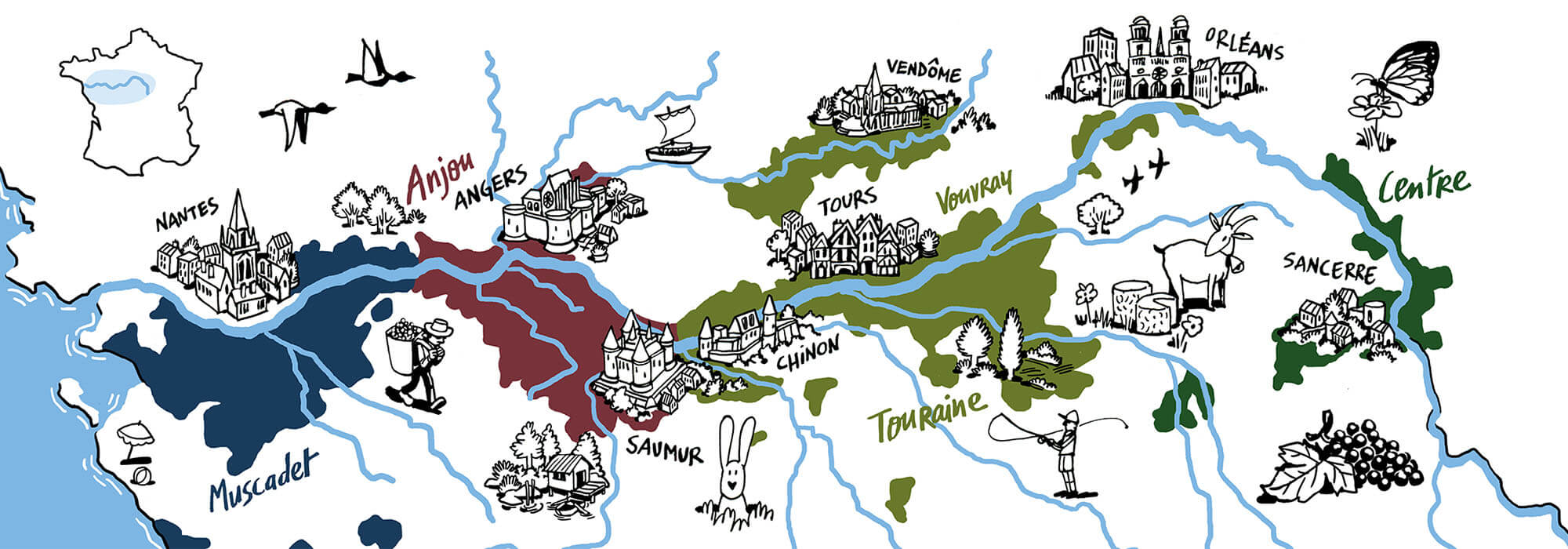
Called the “Garden of France” for its noble landscapes, the Loire Valley is defined by France’s longest river going 600 miles from East to West, crossing 5 different regions from the Ardèche in the Auvergne-Rhône-Alpes region to the Atlantic Ocean.
From the Roman Empire to the introduction of the Appellation d’Origine Controlee (the system for quality wines in France) in 1935 and up to today, the Valley has always been recognized for its perfect climate and diversified soils for quality vines. Given its unique Northerly location, in addition to the substance and vitality afforded by the river, the climate is conducive to producing beautifully refined and concentrated Chenin Blanc, Sauvignon Blanc, Cabernet Franc, Grolleau and Pinot Noir. This well-adjusted climate, in conjunction with the soil composition, allows grapes the ability to ripen uniformly and efficiently and thus enhances the wines’ ultimate flavor and aromatic concentration.
Today, the Valley is France’s third largest producer among official denominations, yet still flew under the radar until we made it accessible for you! Le Garenne offers you a powerful Super Premium wine experience at an affordable price. Explore the uniqueness of Loire’s terroir.
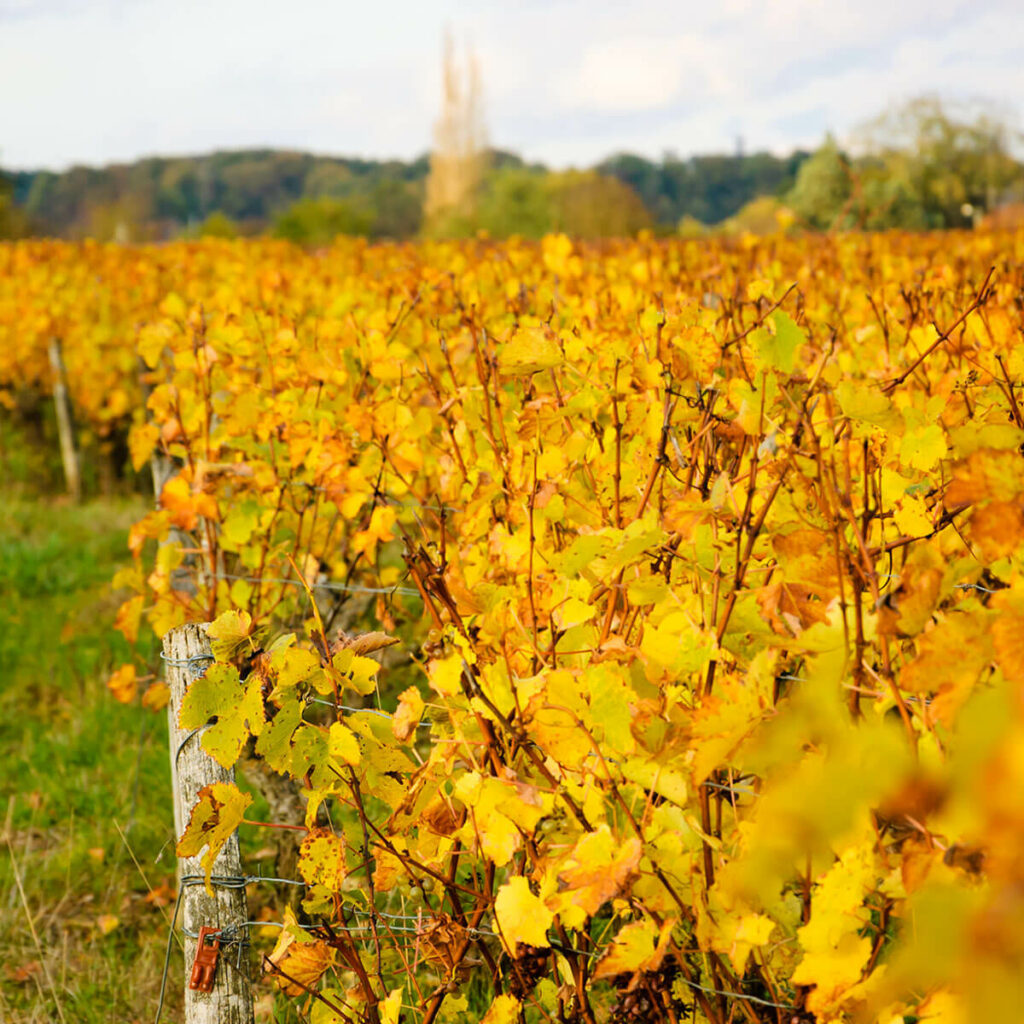
Le Garenne Sustainable Wines: Both Good for your Taste Buds and Mother Nature
In between Muscadet and Sancerre lie 51 AOPs (Protected Designation of Origin meaning the wine comes from a specific regulated region with allowed grapes, growing conditions and minimum quality) and 4 IGP (Protected Geographical Indication labeled with the grape varieties as well as the IGP zone) that represent the most extensive, diversified and original vineyard in Europe, among which 25% is run under Sustainable agriculture (“biologique” or organic in French /HVE – as High Environmental Value). From these, we curated only the highest quality wines from sustainable family farms to bring you the most healthy and authentic experience!
Sustainable winegrowing is very important to us as it carries a comprehensive set of practices that are environmentally sound, socially equitable and economically viable. We select carefully Winegrape growers and vintners throughout the Loire Valley that grow and make high quality grapes and wine. Their sustainable vineyard and winery practices conserve water and energy, maintain healthy soil, protect air and water quality, enhance relations with employees and communities, preserve local ecosystems and wildlife habitat, and improve the economic vitality of vineyards and wineries.
Anjou
Country of Wines and Roses
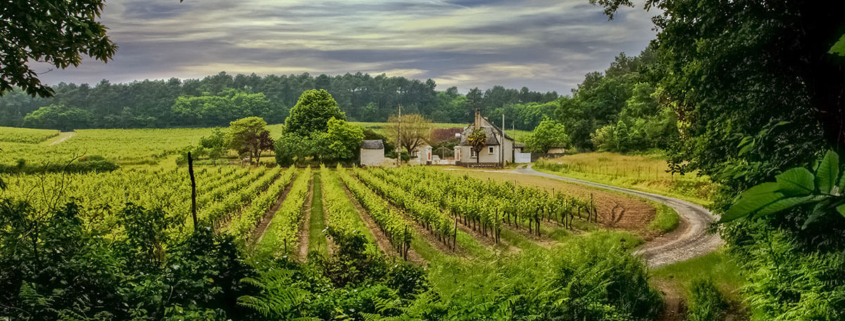
The Anjou region of the Middle Loire is situated around the town of Angers and is known primarily for the rosé wines based on the Grolleau and Cabernet franc, including the Rosé d’Anjou and the Cabernet d’Anjou. The temperate oceanic climate there, mainly dry with minor variations in temperature, brought the proverbial “douceur angevine” – the mild tranquility of Anjou.
White wine made from the Chenin blanc is known as Anjou Blanc while Anjou Rouge is often made from Cabernet Franc. Some of the higher quality wines are often labeled with the AOP designation Anjou-Villages. The Chenin blanc grape has been planted in the region since at least 845 AD. Throughout the years it was known in the region under a variety of synonyms including Pineau de la Loire. The monasteries played a major role in helping to develop the Anjou vineyards, as each had its own enclosed plot of vines. When Henry Plantagenet became King Henry II of England in 1154, the royal court began to serve Anjou wines, and continued to do so even after his death – so for nearly a thousand years, the crowned heads of France and England had a part in boosting recognition of Loire Valley wines. As a result, the vineyards expanded during the 16th and 17th centuries from their original location on the banks of the Loire further towards its tributaries.
The appellation area comprises two distinct regions: Anjou Noir, or ‘Anjou sur Schistes’ on the dark, schist based soil of the south-eastern edge of the Massif Armoricain,- the larger of the areas; and Anjou Blanc, or ‘Anjou sur Tuffeau,’ a smaller area of lighter-colored soils – altered chalk (tuffeau) at the south western extremity of the Paris Basin.
Centre
Home to the most refined Sauvignon Blanc
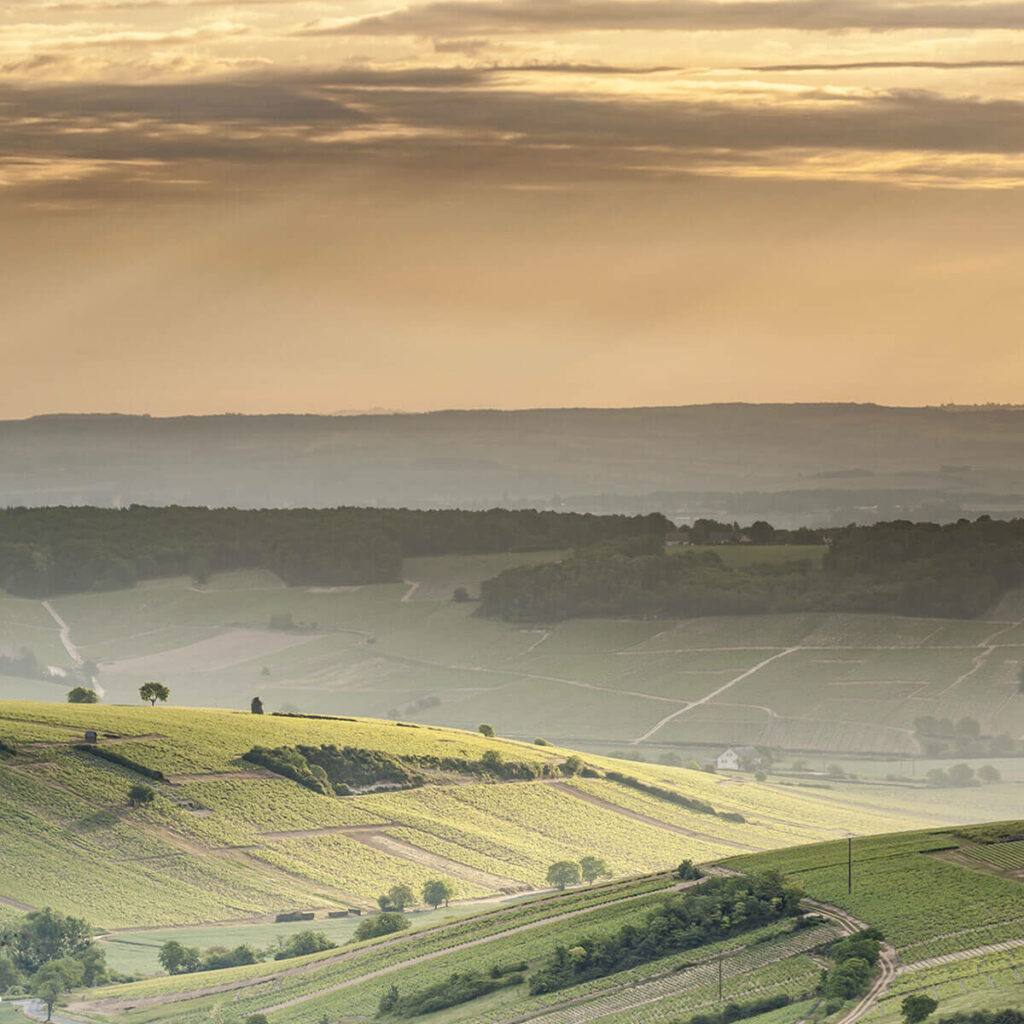
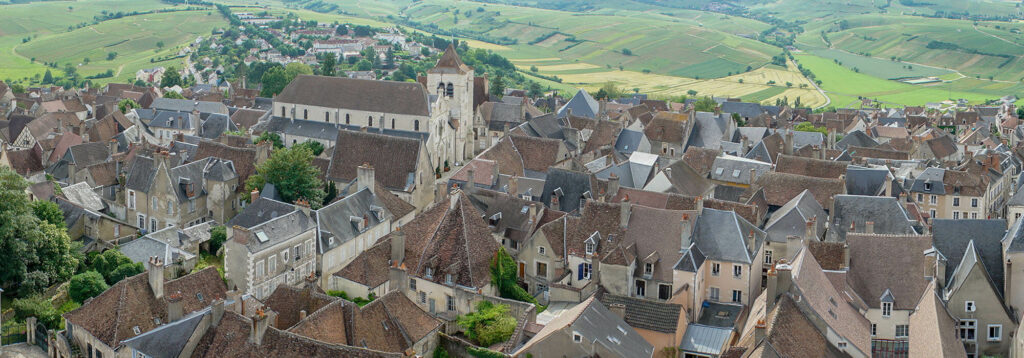
The Upper Loire Valley (or Centre Loire) is the smallest region, but it’s home to the most famous Loire appellations–Sancerre and Pouilly-Fumé. The Sauvignon Blanc from these two areas are emulated throughout the wine world. The two towns of Sancerre and Pouilly-sur-Loire (where Pouilly-Fumé is made) sit on opposite sides of the Loire river with Sancerre being about 10 miles to the northwest of Pouilly. Centre is closest to the source of the Loire River in the Massif Central Mountains and the majority of the vineyards are found along the river where they take advantage of its temperature moderating influence. The soils vary quite a bit with three distinct soil types, all found atop a base of Kimmeridgian Limestone, (the same as Chablis, parts of Champagne, and the white cliffs of Dover):
- Terre Blanche is a mix of clay, Kimmeridgian limestone, and oyster shells, creating wines that are fruity, ageable, and angular with high acidity
- Caillotes features small pebbles of Oxfordian limestone and yields wines with delicate perfume and less structure than Terre Blanche
- Silex, or flint, lends a smoky, gunflint quality to the grapes
In many ways, these soils have more in common with the Burgundy region of Chablis, (only 70 miles/125 km to the east), than with the rest of the Loire Valley. The climate is what can be called semi-continental with big differences in the daytime and nighttime temperatures (the diurnal swing). Frost is always a concern during spring and fog engulfs the valley in the fall.
Sancerre AOP is on the eastern edge of the Loire Valley with grapes planted in all three soil types and, when blended together, create the benchmark for Sauvignon Blanc – racy, refreshing with zippy citrus, lemongrass, gooseberry and chalky minerality. Often overshadowed, the red wines of Sancerre are elegant expressions of Pinot Noir – fresh with bright, high-acid cherry and plum aromas. Pouilly-Fumé on the other hand only produces white wines, rich in texture, with gooseberry and grapefruit flavors. The red Pinot noir wines are very light in both body and color that are similar to other French expression of the grape like some in Burgundy.
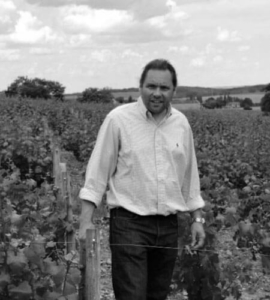
Laurent Reverdy
“Nature is always very resilient”
“In my family, we are winemakers for 14 generations, around 1550, in Center Loire, with today the name Sancerre left bank.”
We find here the most beautiful wealth of France in terms of geology with a very important variety of soil on a tiny piece of land of about 10km: limestone clams, sillex band and white earth coexist and can develop aromas sometimes very mineral sometimes very fruity.
In the region of Sancerre, we have to juggle with complicated climates with phases of heavy rain and others of intense drought. But nature is always very resilient. The timing of the harvest for example is crucial, a week apart can change everything about the level of concentration / dilution of alcohol. This is why our winemaking process is based on a mix of sustainability and biodynamic. The idea is to let the vine express itself as freely as possible, to use a minimum of herbicide and only natural yeasts.
Our goal is to have all Sancerre farms recognized under the label Haute Valeur Environnementale, HVE, within 5 years. For this, we must comply with many rules of environmental compliance including wastewater treatment. I usually say that we take the land of our children. I therefore try to respect the earth to give them the same richness that I have known to him.
And then it’s all about the taste! What matters to me is that the consumer feels a real pleasure of the senses both by tasting one of our first clay-limestone as an aperitif wine or with a long-keeping wine around a gourmet meal.
Chinon
Pure expression of Cabernet Franc
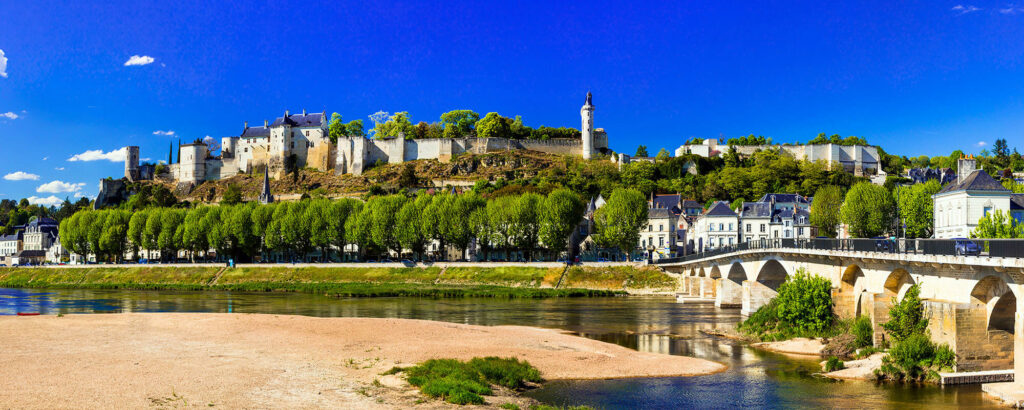
This is the appellation covering wines produced around the historic town of Chinon, in the central Loire Valley. The confluence of the Loire and Vienne rivers marks the start of mild Atlantic conditions. The oceanic climate sweeps through the two valleys, reaching the most distant hillsides and terraces. Slopes are oriented east to west, enjoying excellent, sunny southern exposures; the microclimate is ideal for growing Cabernet Franc. The soils there can be divided roughly into three key types.
The gravel-sand and clay-sand soils close to the banks of the Loire generate lighter, fresher styles, while those hillside sites rich in the local “tuffeau jaune” produce more full-bodied darker, richer, spicier wines with more cellaring potential. This area has been producing wine for many centuries, and although wines of all three colors are made there, the focus is now very clearly on red wines. The typical, quintessential Chinon wine is seen as a Red with attitude: tannic, leafy, berry-scented and made from the Cabernet Franc grape variety —known in this area as Breton. Chinon wines are the softest and rich expression of the grape. In the 19th century, they were compared favorably by critics to the wines of Chateau Margaux and even today is considered some of the best expression of the Cabernet franc grape. The wines from this region can achieve a nice purple color with notes of raspberry fruit and graphite. Unlike Cabernet franc from warmer climates, Chinon are typically served slightly cooler than most red wine and can be long kept in the cellar.
Muscadet
Oceanic expression of Melon de Bourgogne
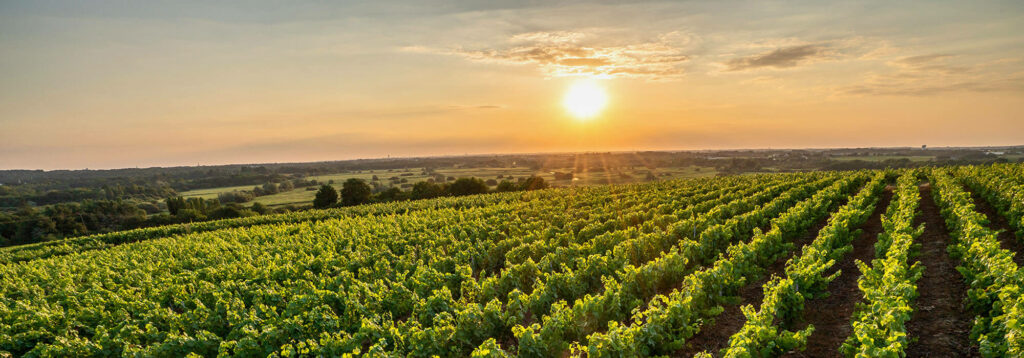
The Muscadet region is located at the westernmost edge of the Loire Valley near the city of Nantes. It takes its name from the two rivers flowing through the vineyards: the Sèvre Nantaise and the Maine. Soils are composed by a varied structure of igneous and metamorphic rock from the Massif Armoricain, made up mainly of gneiss and mica schist, with smaller quantities of green-stone and granite. It benefits from a temperate oceanic climate, with precipitation evenly spread throughout the year. There are variations in climate from one end of the region to the other caused by the varying distances from the coast, the Loire or other bodies of water.
In the 17th century, Dutch wine merchants laid the foundation for the Muscadet style by encouraging the villagers of Nantes to plant the early ripening Melon de Bourgogne grape. Following the devastation in 1709 of winter frost to many of the vineyards in the Loire-Atlantique, King Louis XIV ordered that the frost resistant Melon de Bourgogne grape be given preferential treatment in the replanting of the area. Despite the inference of “Muskiness” in its name, Muscadet is a neutral flavor wine and the Melon de Bourgogne grape has no relation to the Muscat family of grapes.
The Muscadet wines are often bottled sur lie straight from the tank that they are fermented in without any racking or filtering. This creates wines that can be very cloudy and require decsenting to remove sediments but also produces wines that can be fuller bodied and show extra dimensions of freshness.
Touraine & Vouvray
Purity of Chenin Blanc
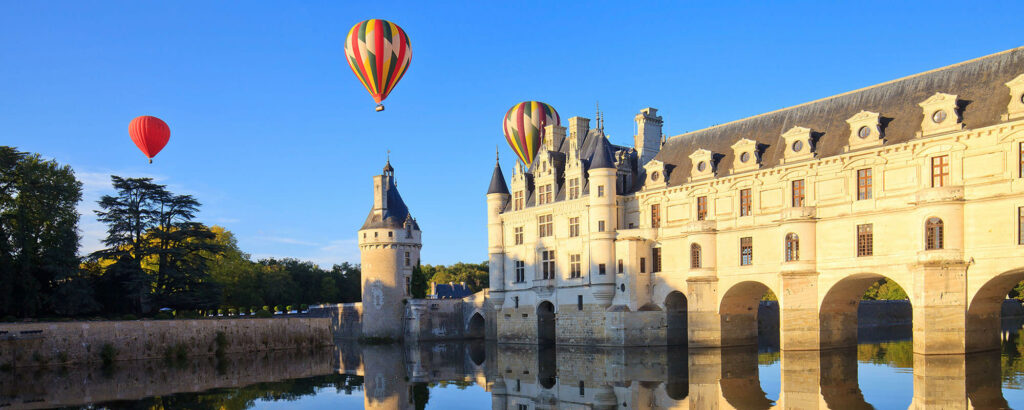
The region around Vouvray and Touraine has some of the most diverse plantings of all the Loire region and makes a wide variety of white, red and rosé wines. For white wines, the main grape is Chenin blanc but Sauvignon blanc and, to a smaller extent, Chardonnay are also planted. For red wines the main grape is Gamay with some smaller plantings of Cabernet Sauvignon and Cabernet Franc. The rosé wines are made from an assortment of Gamay, Pineau d’aunis, Pinot gris and Pinot noir.
Soils range from chalk, sand, gravel, clay and limestone pebbles. The most notable soil type is tuffeau (chalk), a pourous limestone soil that contributes to the zesty acidity found in the grapes of Touraine. The village of Vouvray is one of the largest appellations in the region and makes white wines from Chenin blanc.
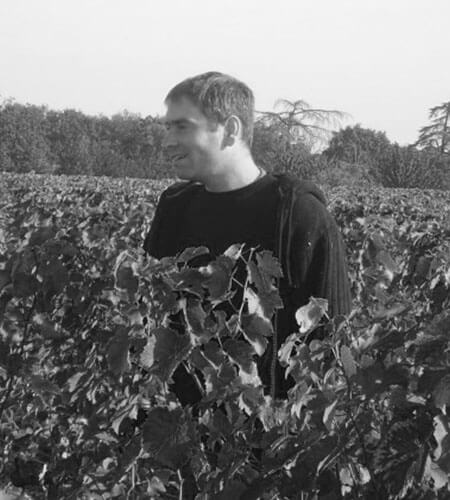
Jean-Marc Gilet
“Our raison d’être as winemakers is to transmit our vineyard and our knowledge to people as passionate as we are, who have a real sense of terroir.”
An art a passion a tradition.
“Pleasure, gluttony, and very soon, the wish to have a second glass… That’s my ambition and wish for anyone tasting my wines! My vineyards are located in Parçay-Meslay, between Tours and Vouvray. It covers 27 hectares on the west side of the denomination’s area, with a South-West exposure. In my family, we have been winemakers from father to son for more than 10 generations and the Chenin Blanc has grown here for 1700 years! Men just come and bring a little help to the vineyard that thrives on this soil.
We moved to organic farming in 2013 and obtained the EcoCert label in 2016. It took us 3 years to master our clay-limestone soil. Indeed, the composition of our soils can go up to 40% of clay. The advantage is that it retains water, but the bad side is that these soils are very difficult to work. But thanks to our good care, our vines are now more resistant to the drought because they make plunge their roots as far as possible and go to draw the water in depth. The minerals generate unique aromas and allow us to create unique local wines. This is our difference; this is our wines’ soul.
The reality is that we are just passing through, our estate remains.”
Cremant From Loire & Traditional Method
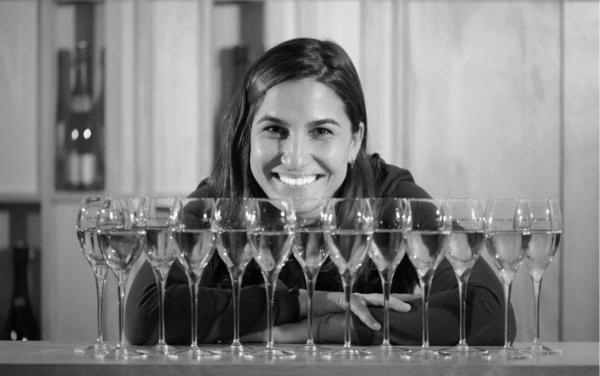
Meredith Feschotte
“The wine could be like fragrance”
“BEFORE WE WERE MAKING WINES AND NOW WE HAVE THE PRESTIGE TO UNITE GROWERS AND TAKE ON A PIVOTAL ROLE.”
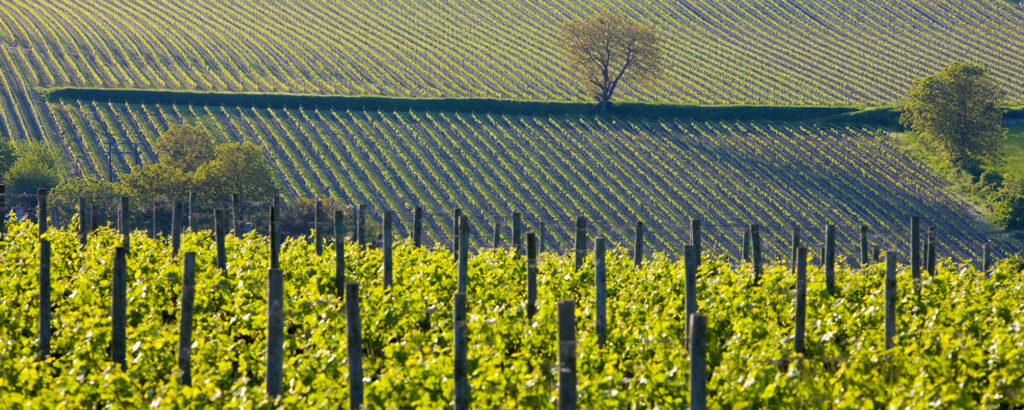
We select most of our grapes from the plots of Vaudelnay, next to the commune of Puy-Notre-Dame on the south bank of the Loire, at an altitude of about 100 meters above sea level.
The Chenin Blanc and Chardonnay grape varieties express themselves particularly well here, taking advantage of the trace elements of this Jurassic soil, combining flint and iron oxide.
The Chenin Blanc develops fine and fruity aromas of pear, citrus and Acacia. It gives balanced wines that age very well.
The Chardonnay will develop aromas reminiscent of grilled almond, hazelnut or peach.
Meredith was born and raised in a family of wine growers and farmers from the Burgundy region. She study Oenology and tarte here carrier in Champagne then she moved to the Loire Valley where she fall in love with the Chenin blanc grapes, for its complexity and very large range of aromas depending on the soil were he grow up, the age of the vine or the fermentation process we gone use…
The wine could be like fragrance, you must express the emotion, atmosphere of a place and through the grape and your best practice of wine making.